Linear Equation Quest: Isolate x One Balanced Step at a Time
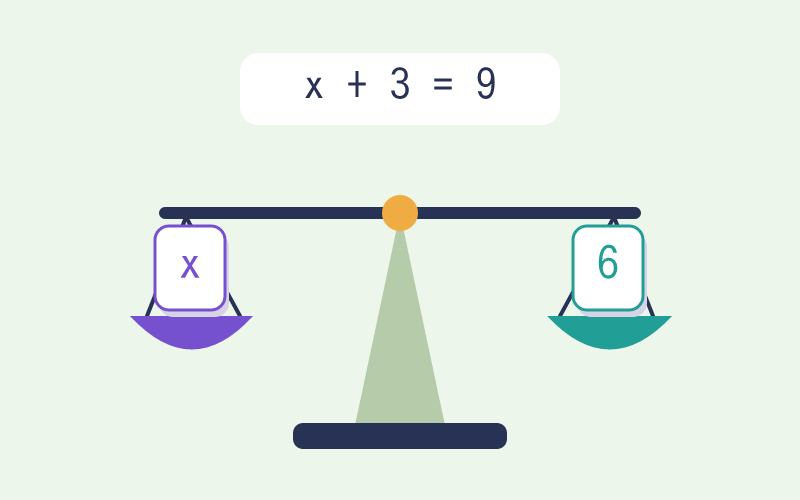
Every equation is a scale that must stay level. Lift equal weight off both pans, share both sides into equal groups, and let x settle on its own — you learn to keep the beam balanced, not to shuffle symbols around.
Why Taking Weight Off Just One Pan Tips the Whole Scale
Grade 8 students often treat 2x + 3 = 11 as symbols to rearrange, so they lighten one side and quietly break the equality. Linear Equation Quest draws the equation as a two-pan balance: the left pan holds two x-blocks and three unit weights, the right pan holds eleven weights. To keep the beam level you lift three unit weights off both pans at once, leaving 2x = 8, then split each pan into two equal groups so a single x-block sits opposite four weights. Every action happens on both pans together, so the scale never tips. When x finally rests alone on one pan, the level beam is your proof that the value is right.
Grade 8 Algebra: Reading an Equation as a Scale, Not a String of Symbols
This game targets Grade 8, where CCSS 8.EE.C.7 asks students to solve linear equations in one variable, including equations with variables on both sides. The balance-scale view builds on the equation reasoning of CCSS 7.EE.B.4 and on earlier work weighing quantities against each other. Students who can keep a beam level while solving are ready for systems of equations and slope-intercept work later in the year.
Three Equation Skills Practiced While Tracking x
- Read the equation structure and locate constants, coefficients, and the x label.
- Use inverse operations to isolate the variable without breaking equality.
- Check a solution by substituting it back into the original equation.
Three Moves to Solve: Read, Isolate, Check
- Read the equation card and identify the x label, coefficient, and constants.
- Choose inverse-operation steps that keep both sides balanced.
- Once x is isolated, substitute the value back into the original equation.
- When variables appear on both sides, gather variable terms first, then handle constants.
Five-Minute Teacher Routine: Name Every Balance Move
Before students click, have them say what will be done to both sides. Once the balance step is verbalized, moving terms and checking solutions become much more reliable.
Linear Equation Quest Questions Teachers Hear
Q: Why do sign mistakes happen when students move terms?
A: They may be repeating a shortcut without the balance idea. Ask them to name the action on both sides, such as subtracting the same term from each side.
Q: What should come first when x appears on both sides?
A: Gather variable terms on one side and constants on the other, then divide to isolate x. Every move should preserve equality.